5 Ways To Get Soft Layered Chapati - Pleats Method


3 Cups All Purpose Flour
2-3 Cups Water
Pinch Salt
1/4 Cup Oil for kneading
Oil for cooking
METHOD
You can use this chapati recipe on how to make the dough. Then divide dough into round evenly shaped balls

Roll out the dough to your desired thickness

Spread oil on the round rolled out dough

Lift the edge of the dough slightly

Make the 1st fold/fan


Pinch both ends of the dough to hold the dough

Make a 3rd fold/fan and pinch edges of both ends

Make a 4th fold/fan and pinch edges of both ends

Make 5th fold/fan and pinch edges of both ends

Make 6th fold/fan and pinch edges of both ends

Lift the last part of the dough and press on the folds

Starting from the tip of the dough press gently so that the folds kind of stick together

Continue pressing along the line

Press to the end of the long dough

Go back to the tip of the long dough and start rolling towards the center

Keep rolling

Make sure the folds are aligned and straight as you roll

Roll tightly to prevent the folds from coming undone

Roll until the tip of the long rolled dough

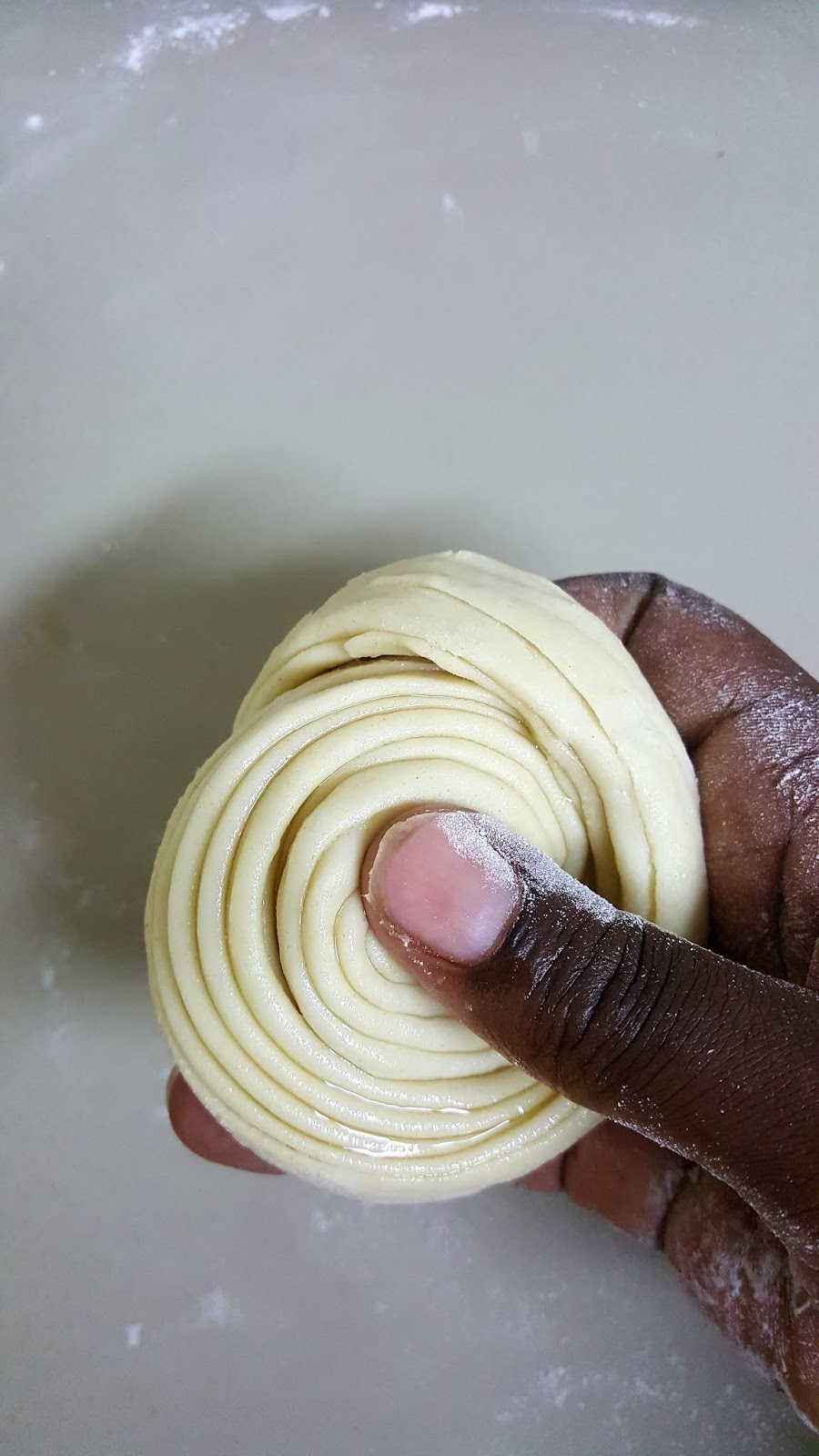
Gently press the dough to make a round shape and the tucked tip to stick to the dough do that it does not unravel

How the finished dough looks like

Flour your work surface and on top of the dough and start rolling

Roll as you turn dough to try and bring out a round shape

Lift the dough, and flip it

Sprinkle more flour and roll second side

Roll to your desired dough size but not too thin or too thick

You will get a perfectly round shaped chapati dough

Roll out as many dough as you can before cooking do that it will not be a hustle when you start cooking

Set one chapati dough on a tawa/pan without oil. Let the chapati cook a few minutes until slight bubbles form at the top and dough darkens a bit

Flip the chapati and pour a tablespoon of oil on top

Spread the oil evenly on the surface of the chapati

Flip the chapati again

Add oil on the first side that has slightly browned

Spread the oil evenly on the surface of the chapati

Keep flipping every few minutes. Do not add any more oil at this point

Press the chapati with spoon or spatula which presses it on the hot pan to give more brown spots

Once you are satisfied with the dark brown colored spots on the chapati flip for the last time

Remove the cooked chapati from the pan and place in a serving dish to keep warm as you finish the rest

The chapati are soft with layers, what we like to call "kitabu" effect. Literally translates to a book since books have many pages, just like your chapati will have

Chapati – FAQs
1. What is chapati?
Chapati is a traditional unleavened flatbread originating from the Indian subcontinent, widely enjoyed across East Africa, including Kenya. It’s made from simple ingredients—whole wheat flour, water, salt, and sometimes oil or ghee.
2. How is chapati different from other flatbreads?
Chapati is thin, soft, and pliable without yeast or baking powder, unlike some other flatbreads like naan. It’s cooked on a hot griddle (tawa) until golden brown spots appear.
3. Can chapati be made gluten-free?
Traditional chapati uses whole wheat flour, which contains gluten. For gluten-free versions, alternative flours like chickpea or millet can be used, though texture and taste will differ.
4. How is chapati typically served?
Chapati is served alongside stews, curries, vegetables, or used as a wrap. It pairs well with Kenyan dishes like sukuma wiki, nyama choma, or lentil stew.
5. Can chapati be frozen?
Yes, chapatis freeze well. Stack them with parchment paper between each and freeze in airtight containers. Reheat on a skillet or microwave.
Nutrition Card – Approx. per 1 chapati (50g)
| Nutrient | Amount | % Daily Value (DV) | Notes |
|---|---|---|---|
| Calories | 140 kcal | — | Varies with size and added fat |
| Protein | 4 g | 8% | From whole wheat flour |
| Carbohydrates | 25 g | 8% | Mainly complex carbs |
| Sugars | 0.2 g | — | Minimal natural sugars |
| Fat | 3 g | 4% | From oil or ghee (optional) |
| Fiber | 3 g | 12% | Good fiber source |
Dietary Compatibility & Notes
| Diet Type | Compatible? | Suggestions |
|---|---|---|
| Vegetarian | ✅ Yes | Made from plant-based ingredients |
| Vegan | ✅ Yes | Use oil instead of ghee to keep vegan |
| Gluten-Free | ❌ No | Traditional chapati contains gluten |
| Dairy-Free | ✅ Yes | Omit ghee or replace with oil |
| Nut-Free | ✅ Yes | Nut-free unless cross-contaminated |
Serving Tip:
Warm chapati pairs wonderfully with rich, saucy dishes and can be used to scoop or wrap food for easy eating.

About Mulunga


No comments